
Abstract: This seminar will introduce Verasonics and its programmable ultrasound platform, designed to support rapid prototyping and research‑driven ultrasound innovation. The talk will outline the system architecture and the design principles that enable flexible acquisition and algorithm development. We will then focus on one of Verasonics’ core technologies: pixel‑oriented beamforming. I will highlight the importance of this paradigm, how it differs from conventional approaches, and a recent Adaptive Ultrasound Imaging (AUSI) technique we developed to balance image quality with the demands of high frame‑rate imaging.
The second part of the seminar will explore ultrafast acquisition strategies and the techniques they unlock. I will emphasize Ultrasound Localization Microscopy (ULM), introducing its core principles and potential for super‑resolution vascular imaging. We will then discuss recent work incorporating pulse‑compression methods, specifically Golay codes, to improve penetration and signal‑to‑noise ratio in ULM. Together, these advances demonstrate how programmable systems and novel beamforming strategies can expand the capabilities of next‑generation ultrasound imaging.
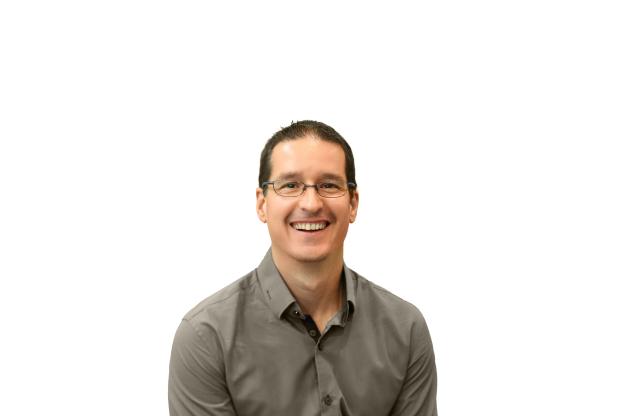
Bio: Miguel Bernal is a biomedical engineer and ultrasound scientist whose career spans advanced research, international collaboration, and technical leadership in medical imaging. He earned his degree in Biomedical Engineering from the School of Engineering of Antioquia in Medellín, Colombia, followed by a Ph.D. in Biomedical Sciences and Biomedical Engineering from the Mayo Clinic College of Medicine in Rochester, Minnesota, under the mentorship of Dr. James F. Greenleaf.
After completing his doctorate, Miguel pursued a postdoctoral fellowship at the Institut Langevin in Paris, France, working with Dr. Mickael Tanter on cutting‑edge ultrasound imaging and wave physics. He later returned to Colombia for a second postdoctoral fellowship at the Universidad Pontificia Bolivariana, continuing his work in biomedical acoustics and translational imaging research.
In 2018, Miguel joined Verasonics Inc. in Kirkland, Washington, as an Ultrasound Scientist, contributing to innovation in programmable ultrasound systems and supporting collaborations with researchers worldwide. In 2025, he became Head of the Ultrasound Science team, where he leads key innovation initiatives and drives technical partnerships with customers, advancing the capabilities and applications of next‑generation ultrasound technology.