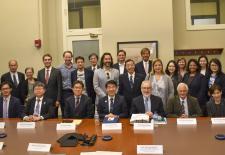
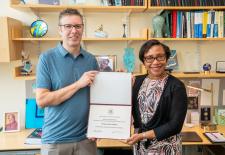
October 2, 2026 ARPA-H kicks off work to advance next-generation personalized biosensors Program-developed technologies empower individuals to “know thyself” by providing deep, real-time biological insights to support decisions about medical treatment and overall wellness September 29, 2026 2026 Microsystems Annual Research Report September 22, 2026 MIT named the nation’s top university by U.S. News for 2026-27 The Institute’s undergraduate engineering, computer science, and economics programs are No. 1; its business program is No. 2. September 21, 2026 Nanoscale mechanics could enable brain-inspired computing A new device uses reconfigurable motion to mimic the firing behavior of a neuron, which could lead to more efficient computing. September 15, 2026 MIT and Institute of Science Tokyo launch new collaboration September 9, 2026 Joel Voldman receives 2026 Bose Award for Excellence in Teaching September 9, 2026 Jelena Notaros Awarded MIT Technology Review's 35 Innovators Under 35 September 3, 2026 Fabrication platform could enable flexible, transparent next-generation photonic chips This scalable process produces high-performance chips for applications like discreet wearables or pliable augmented-reality displays. September 3, 2026 New qubit architecture enables faster, more accurate operations This advance could be a big step toward developing a scalable, practical quantum computer. August 27, 2026 Paving the way for greener ammonia production New MIT research could lead to better materials for a fossil-fuel-free process for making the chemical that's essential to fertilizer and other products. Load More
October 2, 2026 ARPA-H kicks off work to advance next-generation personalized biosensors Program-developed technologies empower individuals to “know thyself” by providing deep, real-time biological insights to support decisions about medical treatment and overall wellness
September 22, 2026 MIT named the nation’s top university by U.S. News for 2026-27 The Institute’s undergraduate engineering, computer science, and economics programs are No. 1; its business program is No. 2.
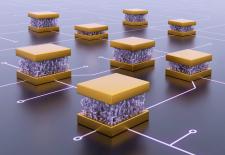
September 21, 2026 Nanoscale mechanics could enable brain-inspired computing A new device uses reconfigurable motion to mimic the firing behavior of a neuron, which could lead to more efficient computing.
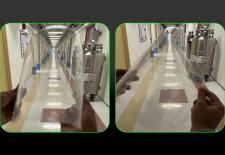
September 3, 2026 Fabrication platform could enable flexible, transparent next-generation photonic chips This scalable process produces high-performance chips for applications like discreet wearables or pliable augmented-reality displays.
September 3, 2026 New qubit architecture enables faster, more accurate operations This advance could be a big step toward developing a scalable, practical quantum computer.
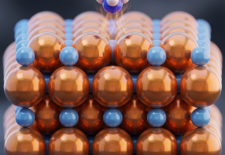
August 27, 2026 Paving the way for greener ammonia production New MIT research could lead to better materials for a fossil-fuel-free process for making the chemical that's essential to fertilizer and other products.